
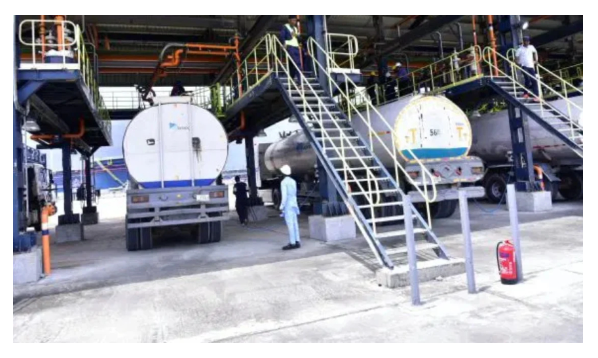
Nigeria’s energy cost crisis has taken a sharper turn as the Dangote Petroleum Refinery increased the gantry prices of petrol and diesel, underscoring the country’s continued exposure to global oil market volatility despite growing local refining capacity.
The refinery adjusted petrol prices upward by N75 per litre to N1,275, a 5.02 per cent increase, while diesel surged by N200 per litre to N1,950—bringing it dangerously close to the N2,000 threshold. The move, confirmed by a senior official, reflects mounting pressure from international crude oil benchmarks driven by escalating geopolitical tensions in the Middle East.
The development signals a critical reality: Nigeria’s deregulated downstream sector remains tightly linked to global pricing dynamics. Despite expectations that Africa’s largest refinery would stabilize domestic fuel costs, market forces—particularly crude oil prices, exchange rates, and logistics—continue to dictate pricing outcomes.
According to industry data from Petroleumprice.ng, the latest adjustment aligns with broader global trends, where supply concerns linked to Middle East instability have triggered price spikes. As a major oil-producing region, disruptions or perceived risks in the Middle East typically ripple across international markets, with immediate consequences for refined products.
For Nigeria, the implications are immediate and far-reaching. Analysts warn that marketers are likely to transfer the increased gantry costs to consumers, potentially triggering another round of pump price hikes nationwide. This, in turn, could exacerbate inflationary pressures, raise transportation costs, and further strain household incomes and business operations.
The pricing shift also challenges earlier optimism that domestic refining would insulate the economy from global shocks. Experts now argue that unless Nigeria decouples its pricing framework from international crude benchmarks—or significantly strengthens its currency and supply chain efficiency—fuel price volatility will remain a persistent risk.
With consumers already grappling with high living costs, the latest hike reinforces a hard truth: local refining capacity alone is not a silver bullet. Without structural adjustments, Nigeria’s energy market will continue to mirror global disruptions, leaving the economy vulnerable to external shocks.