
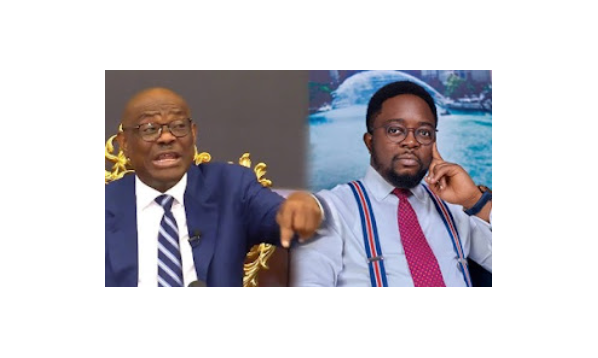
Nigeria’s media landscape is facing a potential flashpoint as the Independent Broadcasters Association of Nigeria (IBAN) has threatened to boycott all press briefings and media engagements involving the Minister of the Federal Capital Territory, Nyesom Wike, following controversial remarks directed at a journalist.
The tension stems from a live television interview on Channels Television, where Wike reportedly said he would have “shot” broadcaster Seun Okinbaloye over what he described as the interview style. The statement has since triggered widespread condemnation from media stakeholders and civil society groups.
IBAN, in a strongly worded response, described the minister’s comments as having violent intent and warned that such rhetoric from a senior government official risks normalizing hostility toward journalists—an industry already operating under pressure in Nigeria.
The association is not just issuing a warning—it is putting real leverage on the table. It demanded an immediate retraction of the statement and a public apology to Okinbaloye and the wider media community. Failure to comply, IBAN says, will result in a coordinated withdrawal of coverage from all independent broadcast stations under its umbrella.
This move signals a high-stakes standoff. On one side, a government official with significant political influence; on the other, a coalition of broadcasters asserting institutional boundaries and press safety.
IBAN referenced Nigeria’s position on the Press Freedom Index—ranked 122 out of 180 countries—to underscore an already fragile media environment. Their argument is clear: statements like Wike’s could deepen risks for journalists who already face harassment, surveillance, and intimidation.
Beyond the immediate controversy, the situation highlights a broader governance issue—how public officials engage with the press in an era where media accountability and political sensitivity are increasingly at odds.
The association grounded its position in constitutional backing, citing Sections 22 and 39 of Nigeria’s 1999 Constitution, which guarantee press freedom and the right to information. The threat of a coordinated blackout is therefore not just symbolic—it is framed as a defensive measure to protect journalists and preserve professional standards.
The ball is now in Wike’s court. His response—or lack of it—will determine whether this escalates into a full-scale media standoff or de-escalates into a reputational recovery exercise.
In practical terms, this is less about one comment and more about precedent. How this is resolved will shape the boundaries of engagement between power and the press going forward.