
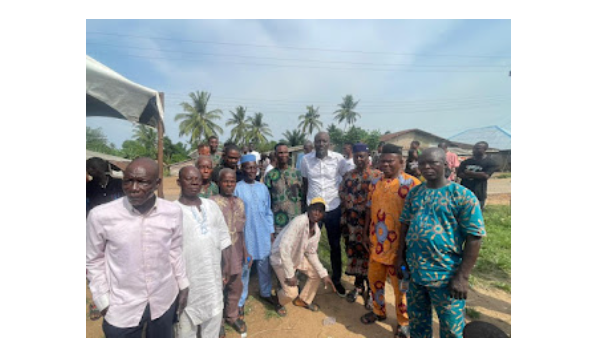
A strong message on grassroots development and people-focused leadership emerged in Ogun State as Wale Kuku, popularly known as Dodondawa, engaged residents across Oni, Ilushin, Iwopin, and Ibiade wards in a community townhall that blended civic dialogue with social festivities.
The Easter Day gathering, organized with support from Labour Party stakeholders, drew large crowds and doubled as both a political engagement platform and a community celebration, featuring music, dance, and family-oriented activities.
At the heart of the event was a shift in narrative—from short-term political appeasement to long-term economic empowerment. Kuku used the platform to reinforce his commitment to inclusive development, emphasizing job creation, support for small businesses and farmers, and improved access to education.
“I will never be a distant leader. I am here to listen, to serve, and to keep my promises,” he said, positioning himself as a hands-on representative aligned with grassroots priorities.
The tone from residents was equally telling. Community members openly pushed back against what they described as “handout politics,” calling instead for sustainable development initiatives that directly impact livelihoods. A youth leader, Mr. Anifowose, highlighted longstanding neglect in the area, underscoring growing impatience among younger populations for tangible progress.
In response, the event incorporated practical interventions, including scholarship awards for students and support packages for farmers, artisans, and small-scale entrepreneurs—moves that signal an attempt to align political messaging with immediate impact.
Host of the event, Adiele, reinforced this direction, stating that leadership must prioritize opportunity creation over temporary relief measures.
From a broader lens, the engagement reflects an evolving political dynamic at the grassroots level—where voters are increasingly demanding accountability, economic inclusion, and measurable outcomes rather than symbolic gestures.
If sustained, this shift could redefine political expectations in the region, turning community engagement from mere optics into a performance-driven contract between leaders and the people.