
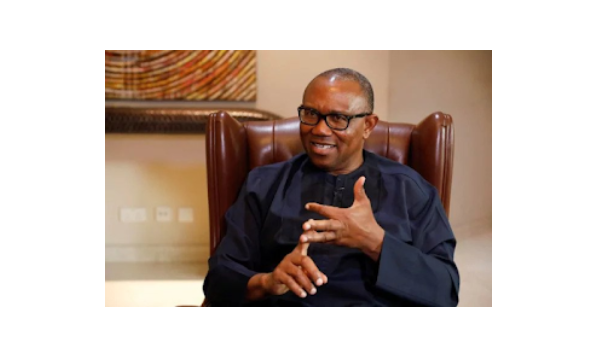
Fresh political tension is brewing ahead of the 2027 elections as Peter Obi takes aim at prominent figures from Nigeria’s pro-democracy era, accusing them of abandoning the ideals they once championed.
Obi’s criticism comes in the wake of the decision by the Independent National Electoral Commission (INEC) to derecognise leaders of the African Democratic Congress (ADC), a move that has sparked outrage within opposition circles and intensified concerns over the country’s democratic trajectory.
In a strongly worded post, Obi described it as a “historical irony” that individuals who stood at the forefront of the struggle against military rule—particularly during the era of Sani Abacha—are now being accused of actions that undermine democratic values and human rights.
He argued that recent developments suggest a troubling shift, where former defenders of democracy now exhibit tendencies he considers more repressive than the regimes they once opposed. According to him, the situation reflects how political power can fundamentally reshape priorities and behavior.
The remarks also revive the legacy of the National Democratic Coalition (NADECO), the influential group formed in 1994 to challenge military rule and demand the validation of the June 12, 1993 presidential election. NADECO played a critical role in resisting authoritarian governance, often at great personal cost to its members.
Obi’s comments are widely seen as a direct critique of political elites linked to that movement, including figures within the current administration of Bola Ahmed Tinubu, many of whom were once celebrated for their role in restoring democracy.
The ADC has already condemned INEC’s action, alleging it forms part of a broader strategy by the ruling All Progressives Congress (APC) to weaken opposition parties ahead of the next general election. Obi’s intervention adds significant political weight to that narrative, framing the issue not just as a party dispute but as a test of Nigeria’s democratic integrity.
By invoking comparisons with Abacha’s era—long regarded as one of Nigeria’s most repressive periods—Obi has escalated the rhetoric and deepened the political fault lines, signaling what could become a defining debate as the country moves closer to 2027.
As tensions rise, the controversy underscores a broader concern: whether the institutions and actors that once fought for democracy can still be relied upon to uphold it in today’s political climate.